01
01 Background
Argo AI was an autonomous vehicle technology company founded in 2016 by Bryan Salesky and Peter Rander, both veterans of Google’s and Uber’s self-driving programs. Headquartered in Pittsburgh, Pennsylvania, Argo AI developed the software, hardware, maps, and cloud-support infrastructure to power self-driving vehicles. Ford Motor Company invested $1 billion in 2017, and Volkswagen Group invested $2.6 billion in 2020, with each owning roughly 42% of the company. At its peak, Argo AI was valued at $12.4 billion and employed over 2,000 people.[1]
Argo’s autonomous vehicles were tested on public roads across multiple markets including Pittsburgh, Miami, Austin, Palo Alto, Detroit, and Washington, D.C. in the United States, and Hamburg and Munich in Germany. The company partnered with Lyft for autonomous ride-hailing and with Walmart for autonomous deliveries.[2]
Ford, Argo AI, and Volkswagen Partnership Announcement
02
02 Princeton Lightwave & Argo Lidar
In 2017, Argo AI acquired Princeton Lightwave, a Cranbury, New Jersey company specializing in indium gallium arsenide (InGaAs) single-photon avalanche diode (SPAD) sensors. Princeton Lightwave, led by CEO and CTO Mark Itzler, had developed advanced shortwave-infrared LiDAR sensors originally used in defense and reconnaissance applications. Argo saw an opportunity to adapt this single-photon-sensitive technology for the demanding requirements of autonomous driving.[3]
The Princeton, New Jersey location became the headquarters for Argo Lidar — Argo AI’s in-house LiDAR solution purpose-built for autonomy. I was one of the electrical engineers responsible for designing Argo Lidar. Our customers were Ford and Volkswagen, and we had very strict standards to meet for automotive qualification.
03
03 Argo Lidar Capabilities
Argo Lidar delivered the industry’s longest-distance sensing capability at over 400 meters, enabling safe driving at highway speeds. The core innovation was Geiger-mode sensing — the ability to detect the smallest particle of light, a single photon — combined with higher-wavelength operation above 1,400 nanometers. This gave Argo Lidar a unique set of capabilities:
- 400+ meter sensing range for safe driving at highway speeds
- High-resolution imagery for complex city environments
- Low-reflectivity detection — identifying dark objects at a distance
- 360° rotation for full coverage, all from a single sensor
This proprietary laser sensor was purpose-built specifically for the demands of self-driving, using our in-house SPAD technology adapted from Princeton Lightwave’s defense heritage.[4]
Argo Lidar Sensor Unit
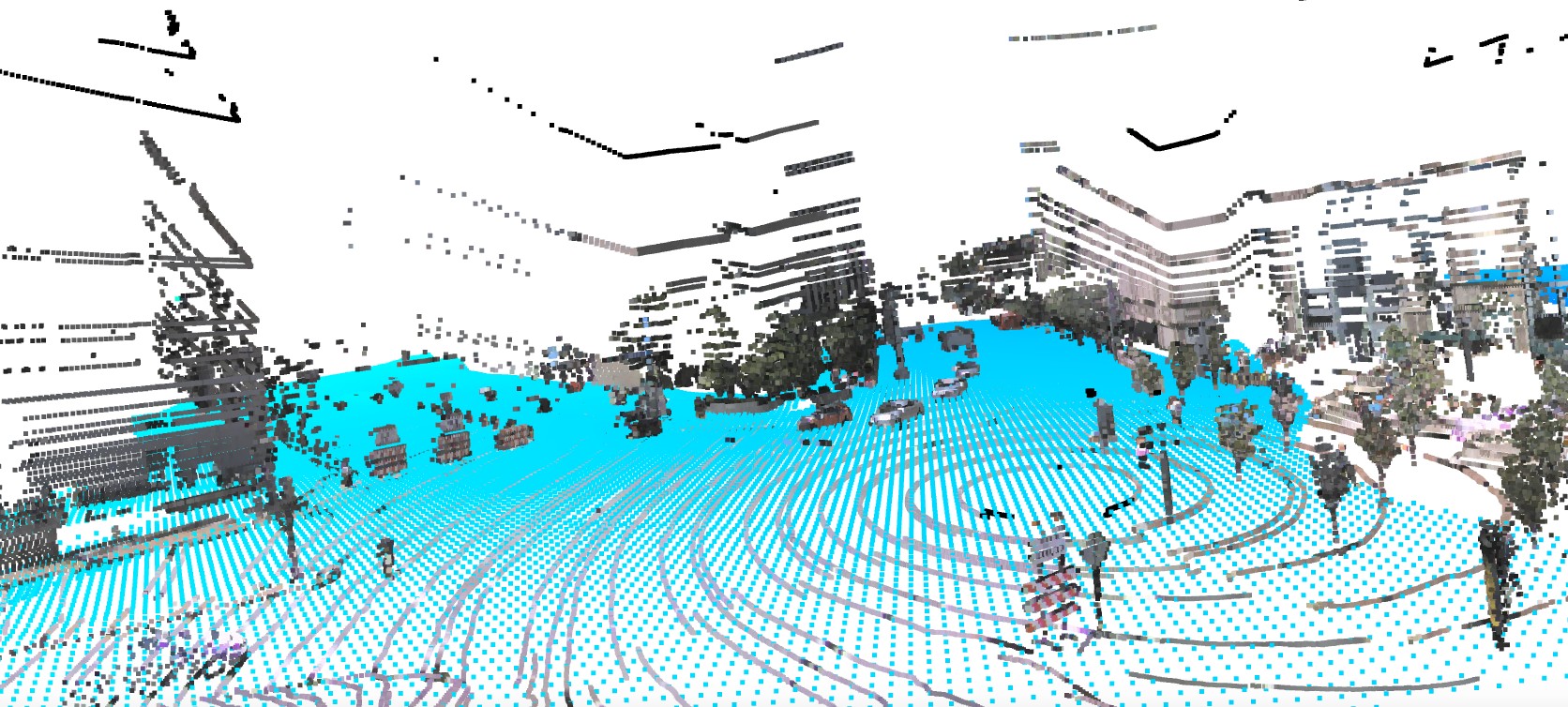
Argoverse 2 — LiDAR Dataset Visualizations
04
04 Hardware Engineering
As a Hardware Designer on the Argo Lidar team, I was responsible for the end-to-end hardware development of the LiDAR sensor head. This included designing schematics and layouts for multilayer high-speed rigid, rigid-flex, and flex PCBs, as well as characterizing, verifying, and validating all PCBAs within the sensor. I collaborated closely with OEM partners to meet automotive qualification standards including ISO 26262 functional safety, USCAR, SAE, and AEC requirements.
A significant part of the role involved scaling prototype designs to volume production with global contract manufacturers — working through DFM reviews, fixturing, and calibration processes. I conducted worst-case circuit analysis per automotive standards accounting for tolerance, aging, and temperature, and designed the bring-up, calibration, and debug solutions used to test vehicle sensors in the lab and in the field. The designs spanned DDR, SPI, I2C, EEPROM, clock distribution, TECs, power supplies, and system health monitoring interfaces.
Argo Lidar — 3D Point Cloud Visualization
05
05 Vehicle Platforms
Argo AI evolved through multiple generations of autonomous vehicle platforms. The Gen 1 platform was a Ford Fusion Hybrid sedan equipped with a sensor halo on the roof — this was the original test vehicle seen driving the streets of Pittsburgh and other early test markets.
The Gen 2 platform featured an updated sensor suite and refined vehicle integration. The Gen 3 platform advanced to the Ford Escape Hybrid, which began driverless testing on public roads in Miami and Austin in 2022. In Europe, the Gen 4 platform deployed the all-electric Volkswagen ID. Buzz for testing programs in Hamburg and Munich. The company also partnered with Walmart for autonomous delivery services in Miami, Austin, and Washington, D.C.[5]
06
06 Vehicle Operations
Argo AI operated autonomous vehicles across a wide range of markets in the United States and Europe. In the U.S., vehicles were tested on public roads in Pittsburgh, Miami, Austin, Palo Alto, Detroit, and Washington, D.C. In Europe, the Volkswagen ID. Buzz was deployed in Hamburg and Munich. These diverse environments — from dense urban streets to highway corridors — allowed Argo to validate its self-driving system across a broad set of real-world conditions.
07
07 Legacy
In October 2022, after Ford reported an $827 million net loss for the quarter, Argo AI was shut down and its technology and employees were absorbed by Ford and Volkswagen. Though the company’s chapter was short, the technology and team represented a significant milestone in autonomous driving. Argo Lidar was the first production-intent Geiger-mode LiDAR designed for automotive applications, and the Princeton team’s SPAD technology continues to influence the LiDAR industry. Ford and Volkswagen absorbed the technology and team members to continue in-house development of advanced driver-assistance and autonomous driving systems.